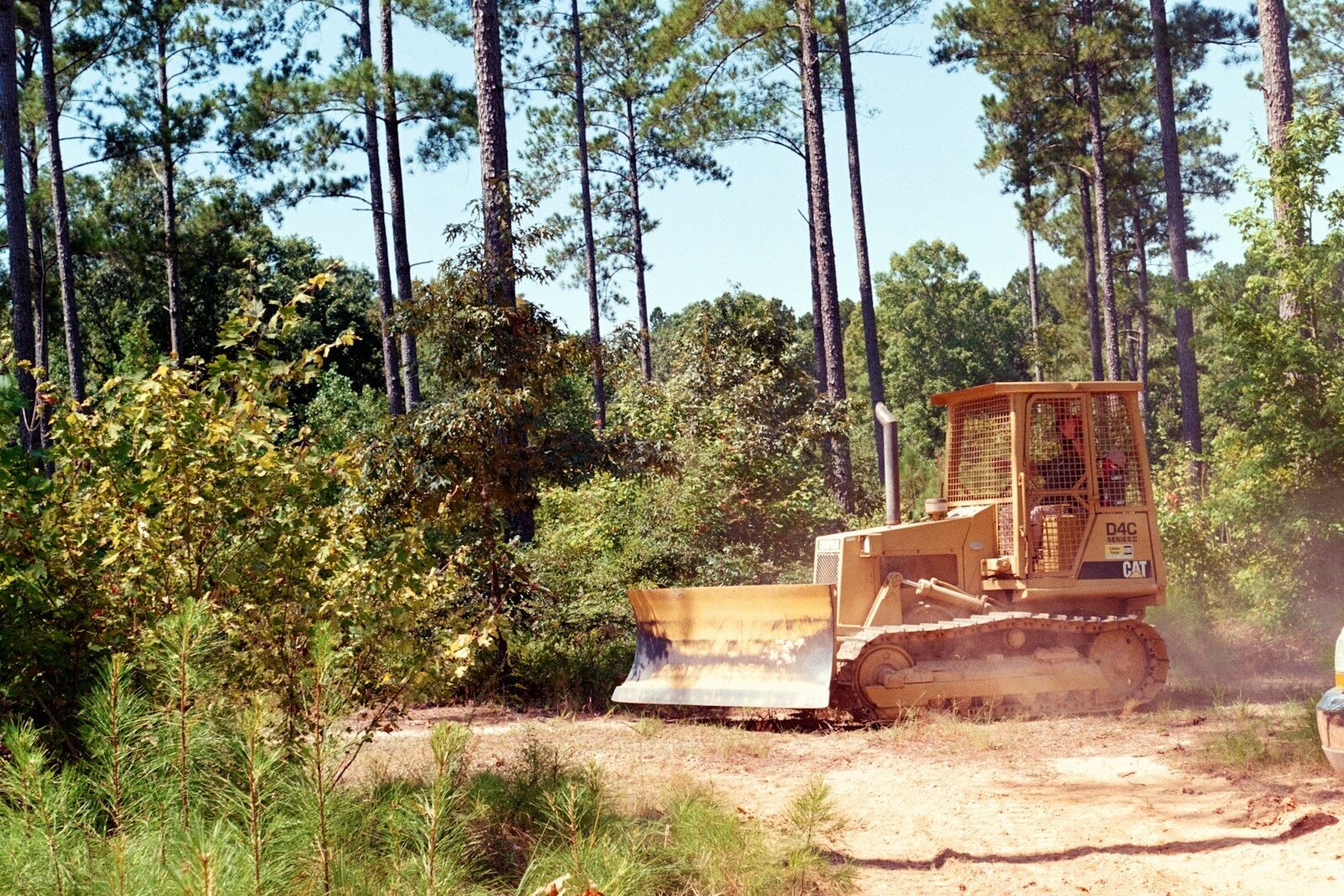
Ask a Spotsylvania or Stafford landowner what they would clear first with one day of machine time, and the answer is rarely the middle of a field. It is the edges. The fence line that disappeared into multiflora rose and autumn olive five years ago and has not been repairable since. The understory so thick you cannot see twenty feet into your own woods. The field edge that creeps a mower’s width inward every season. Underbrush and fence line work is unglamorous, and it is some of the highest-value clearing there is — because it gives you back ground you already own and makes the rest of the property maintainable again.
Fence Lines
A fence you cannot reach is a fence you cannot fix, and livestock figure that out before you do. A mulching machine works a fence line from one side or both, grinding the brush, briars, and saplings that have grown through the wire, without tearing the fence itself down in the process. Owners typically walk the line with the operator first, flagging gates, corners, and any wire they know is down or buried. Once the line is open, posts and wire can be repaired or replaced on a clean corridor, and — just as important — the line can be mowed or brush-hogged from then on, which is what keeps it open.
Old wire deserves one honest warning: grown-in, rusted wire hidden in brush is hard on equipment and easy to miss. Tell the operator about any fence you suspect is buried in the growth; finding it in the walk-through is far better than finding it with the drum.
Underbrush and Woodlot Floors
Underbrush clearing takes the thicket out from under a standing canopy and leaves the mature trees, opening wooded ground into something you can walk, ride, and see through — the park-like floor that makes acreage feel like a property instead of a wall of green. It is the standard first pass for new owners of wooded Stafford and Spotsylvania lots, for hunting ground where visibility and lanes matter, and for homesites where the owners want the woods kept but made usable. Because the machine is selective — it grinds what it is pointed at — specimen trees and plantings you want kept are flagged and worked around.
Field Edges and Lanes
Edge work pairs naturally with fence line work in a single visit: the same pass that opens the line takes the creeping edge back to where the fence or the tree line says the field actually ends. Lanes to back acreage, stands, and outbuildings are cut in the same mobilization. Stacking these jobs into one visit is how a single day-rate day turns into a property that feels twice as maintained.
Tell us roughly how much fence line, in what condition, and how thick the understory is. Underbrush and fence line work is priced by the day, typically $2,500 to $2,750 locally, or quoted by the project after an assessment — and a photo of the worst stretch tells the operator more than a paragraph can. Also see: Forestry Mulching · Pasture & Field Reclamation.