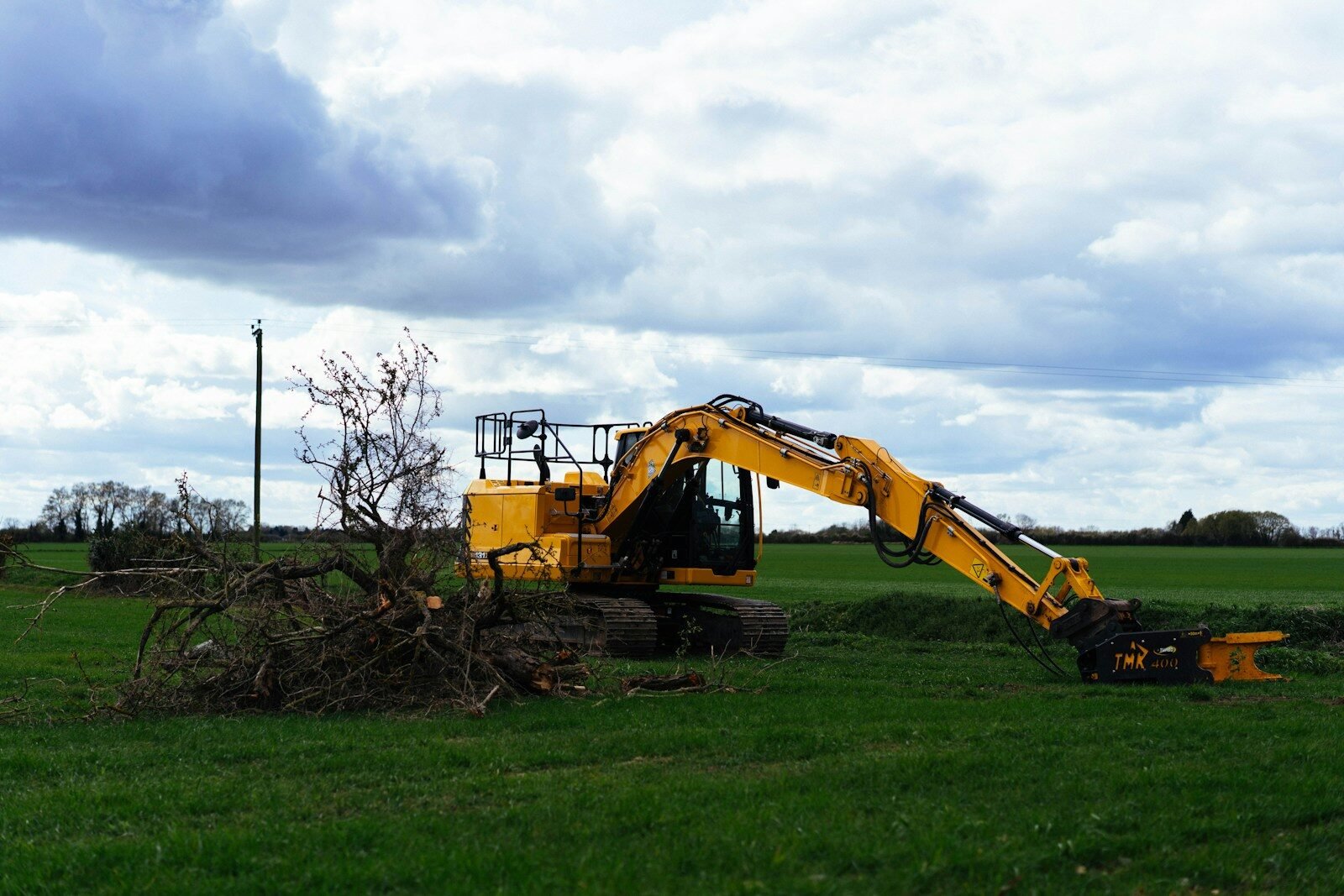
When the end goal is a foundation, a driveway, or a septic field, mulching alone is not the whole job. Traditional lot and land clearing is the full-removal work: standing material comes down or is pushed out whole, roots come out of the ground, and the site is left ready for the next trade — the builder, the excavator, the septic installer — to start on schedule. Around Fredericksburg, with Spotsylvania and Stafford building as fast as they are, this is the work that turns a wooded parcel into a homesite.
What Traditional Clearing Includes
- Full removal of standing growth. Material is felled or pushed out with root balls attached, depending on size and what stands around it. Merchantable timber, if your lot has any, is worth a conversation before work starts — on the right parcel, logs have value that can offset clearing cost.
- Root and stump excavation. Where building is planned, roots come out rather than being left to decay under a future foundation or driveway, where they eventually leave soft spots. Root raking pulls the mat of roots and debris out of the topsoil so grading and planting go cleanly.
- Debris handling, your choice. Material is chipped, ground in place, stacked for burning where permitted, or hauled off — priced accordingly. Many owners in this area clear the building envelope traditionally and mulch the rest of the lot, which is often the smartest budget split on a one-to-five-acre parcel.
- Rough grading and site prep. The cleared ground is left smoothed and workable — ready for a builder’s layout, perc testing, or a driveway cut.
When Traditional Beats Mulching
Choose traditional clearing when you are building on the ground, when what is standing is large mature timber beyond a mulching head’s honest capacity, when roots must be gone rather than left, or when buried debris and old farm dumps need to come out. Choose mulching for everything else — it is faster and costs less for reclaim, lanes, views, and pasture. Our Mulching vs. Traditional page walks the decision side by side.
A Note on Permits and Counties
Clearing and grading work can trigger county erosion-control and grading requirements, and the thresholds differ between Spotsylvania County, Stafford County, and the City of Fredericksburg — as does what is allowed near streams and on agricultural parcels. Before work starts, check with your county’s building and land-use office about what your specific project needs. That is a county question, and the county’s answer is the one that counts. The companies we connect you with work in these counties regularly and can tell you what they are seeing required on similar jobs, but they cannot answer for the county.
Describe the lot, the size of what is standing, the terrain, and what you are building. You will be matched with a local company equipped for full-removal clearing. Also see: Pricing Guide.