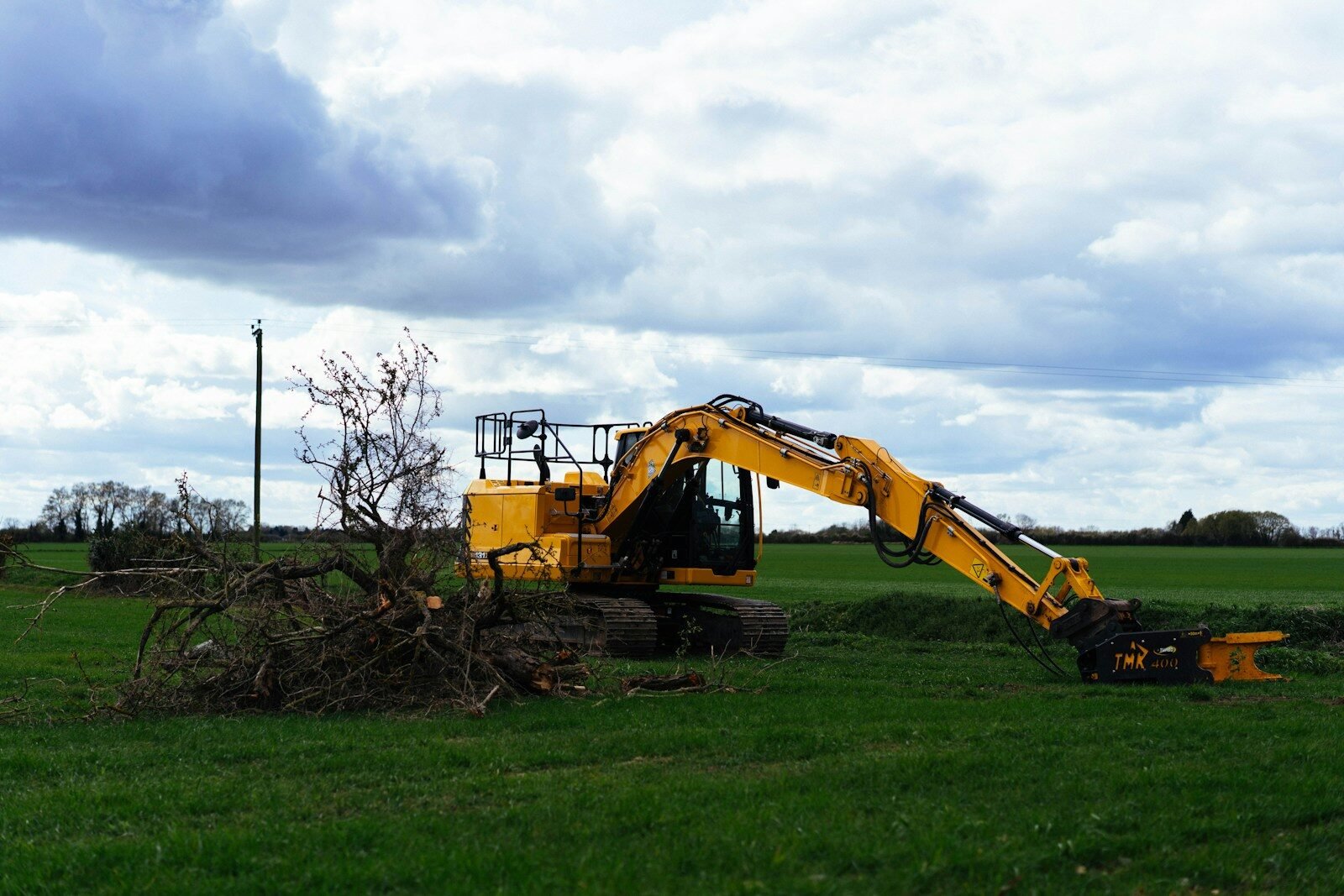
The City of Fredericksburg itself is built out — the clearing work here lives on its fringe and in the parcels the city grew around: wooded lots that never got built on, overgrown acreage behind established neighborhoods, and rural-edge properties where a future homesite is still a wall of green. Owners here tend to share one story: they bought the land for what it could be, and the first real project is making it visible.
What We See Around Fredericksburg
Lot work leads. A typical smart project on a fringe parcel clears the house site, driveway, and septic area traditionally — roots out, ground workable — and mulches the remainder, so the owner starts with a clean, park-like lot instead of a scraped one. The second common story is the long-held parcel: land owned for years or inherited, gone to saplings and invasives, that needs to be opened up before it can be sold, built on, or even honestly evaluated. A day or two of mulching that makes a parcel walkable changes every conversation that follows it — with builders, with buyers, and with family.
City-fringe work carries city-fringe details: close neighbors, shared driveways, and lots where what happens to debris and where machines enter matters to more people than the owner. Local operators handle that choreography weekly; flag neighbor and access concerns in the assessment, not on the morning the machine arrives.
Owners should also know that parcels in and near the city can sit under city or county land-use and erosion rules depending on which side of a line the land falls — and which rules apply to a specific parcel is a question for the City of Fredericksburg or the surrounding county, asked before work starts, not after.
Or use the assessment form: acreage, terrain, current condition, and your end goal, plus a photo if you have one. Day rates typically run $2,500 to $2,750 locally. Also see: Forestry Mulching, Lot & Land Clearing, Pricing Guide, Spotsylvania.